Visual texture and paint surface: the difference
Visual texture is the surface quality perceived through an image’s marks and variations. Physical texture belongs to the object itself: its relief, roughness or thickness. The two can be related but are not equivalent. A painted area can suggest roughness while being relatively smooth.
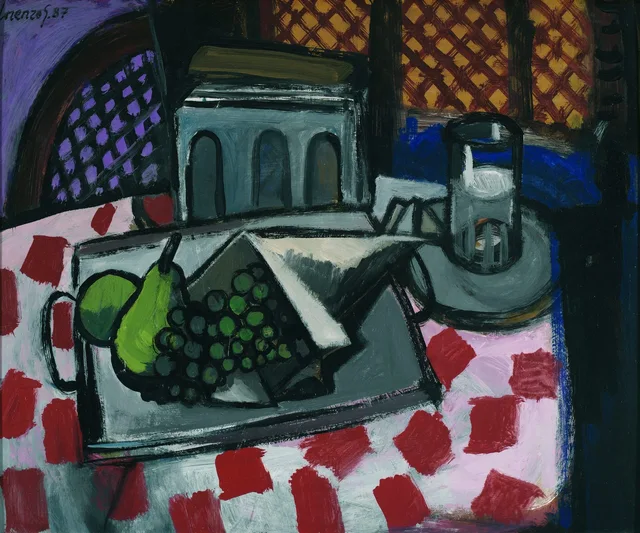
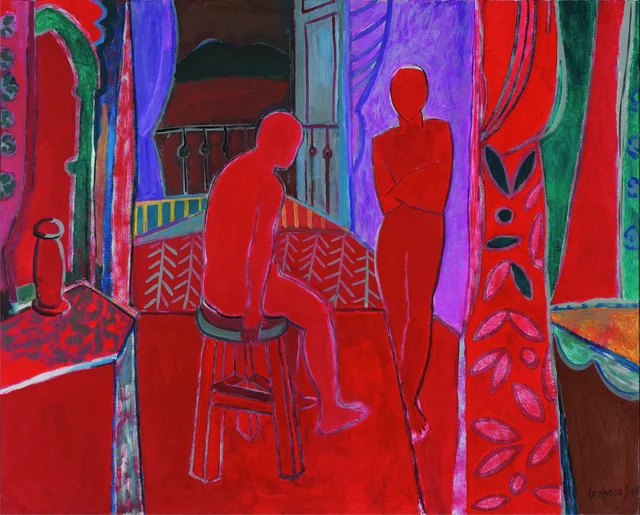
The distinction makes descriptions of reproductions more rigorous. Bodegón de la tostadora and Interior rojo, by Lorenzo González Sánchez, show marks, repetition and differences of density. A photograph cannot by itself establish layer structure, pigments or tools.
Texture, pattern and motif
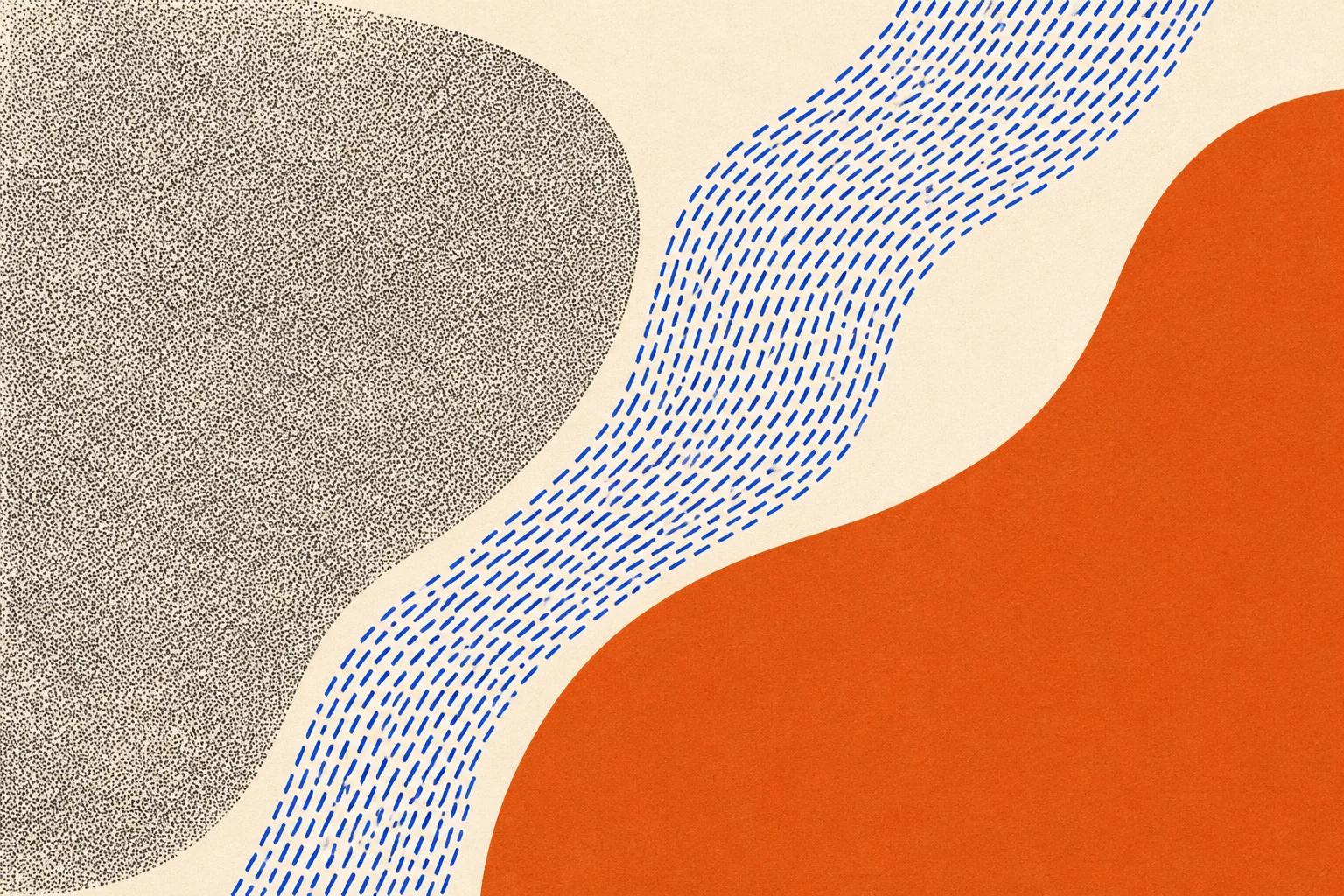
Getty’s vocabulary distinguishes visual appearance from tactile surface quality. Pattern should also be distinguished from texture: patterns organise repeated marks, whereas visual texture can arise from irregular distribution without a recurring motif.
A painted tablecloth offers at least two levels of observation: the fabric or decoration represented and the marks representing it. A grid may describe an object, organise composition and establish visual density. Each claim needs visible support.
Repetition in the still life
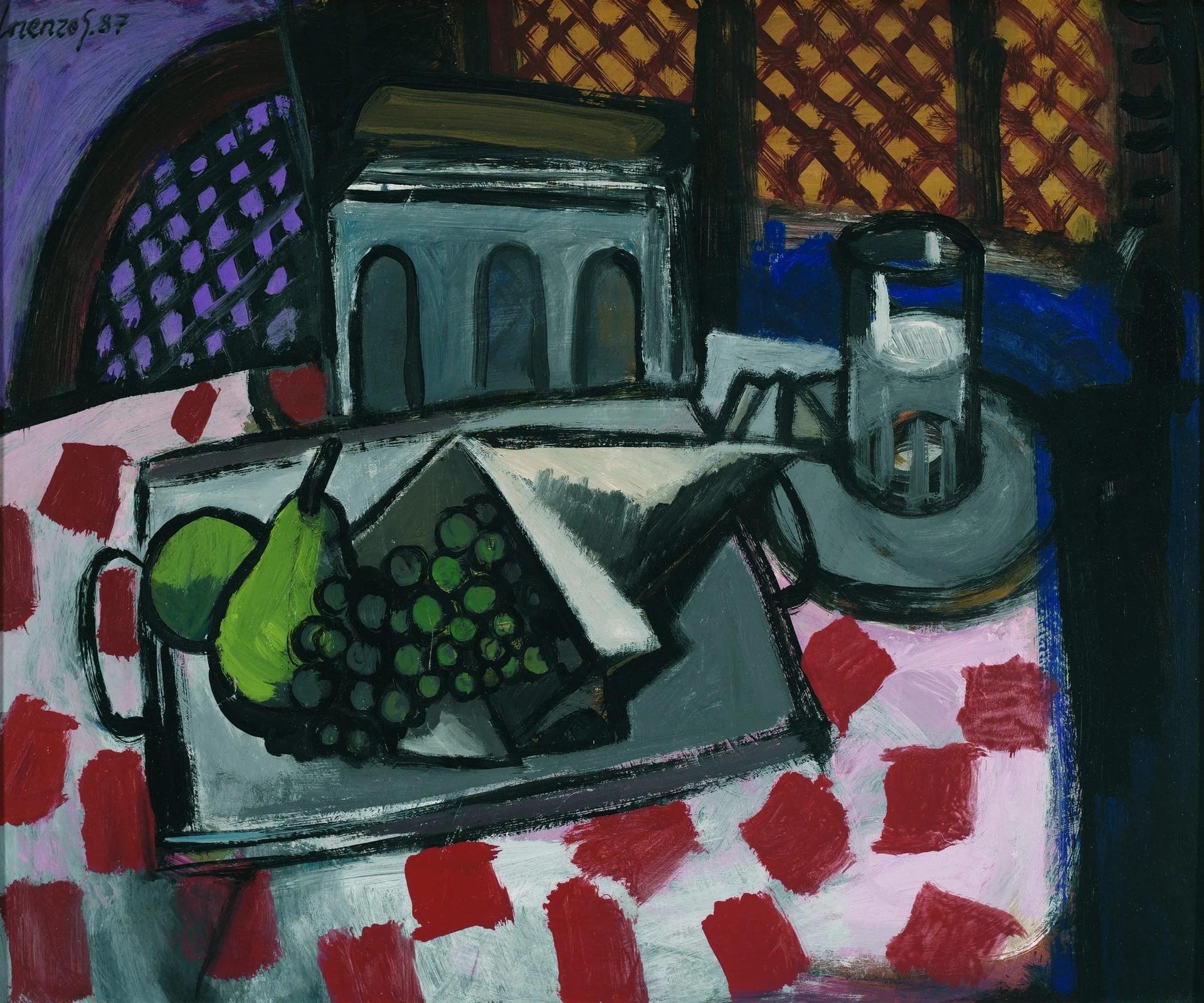
In Bodegón de la tostadora, red marks on the cloth differ from the dark diamonds behind. Scale, direction and relationships to light fields change. The whole surface does not have the same degree of activity.
Toaster, tray and glass introduce broader profiles among those marks. Their comparison reveals alternation between patterned areas and relatively continuous masses. It does not establish how layers were applied or the time between them. The still-life reading examines how these contrasts function across table and background.
Patterns also define space
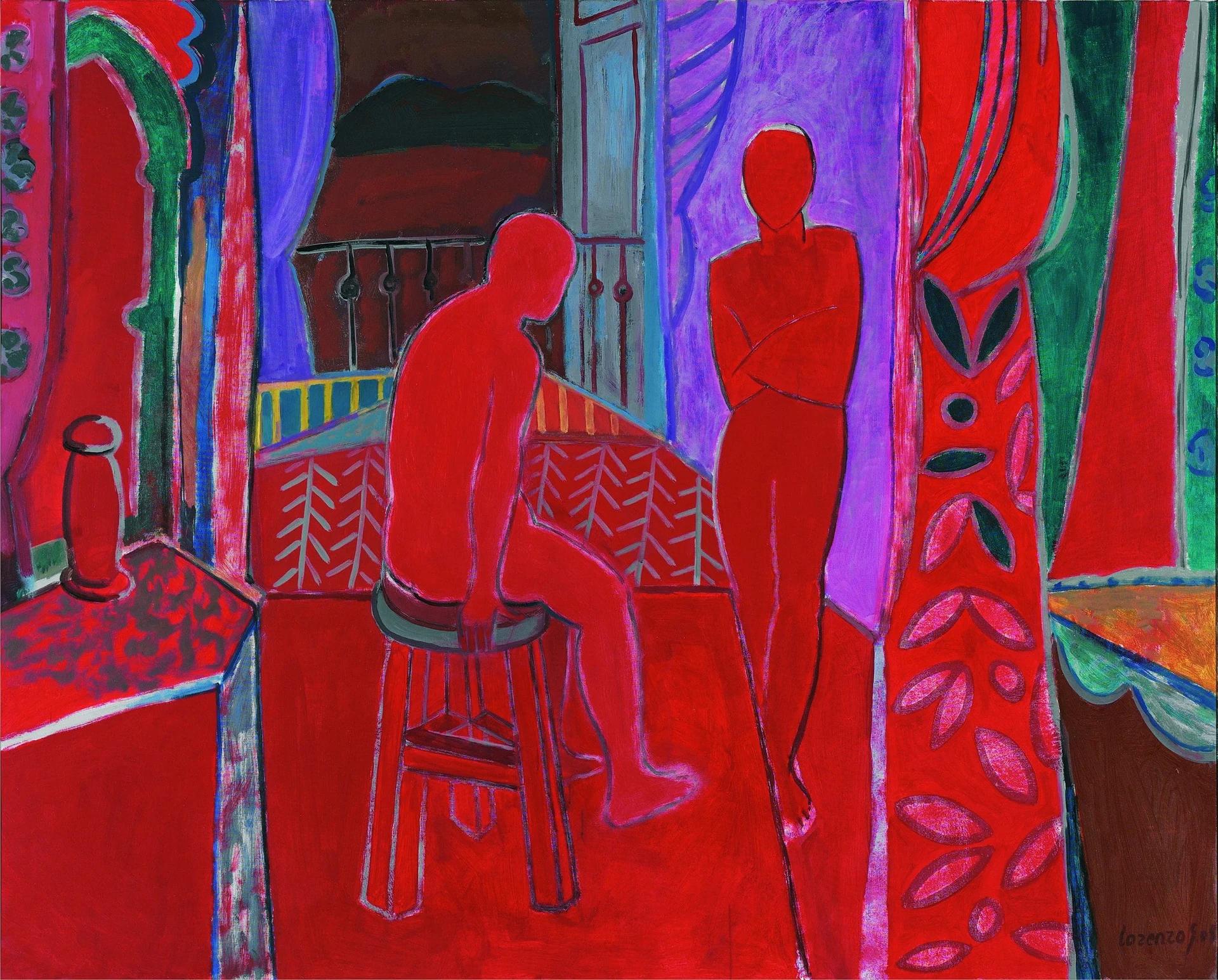
In Interior rojo, light marks towards the back and curtain motifs differ from the figures’ large red areas. Repetition identifies surfaces and introduces directions without requiring continuous light gradation.
A light boundary preserves the seated figure against nearby red. Comparing that edge with denser areas helps explain the body’s legibility in an active setting. The figure–ground article develops this question.
What requires the original
A photograph records reflected light under particular conditions. Lighting can emphasise or conceal relief; resolution and compression can soften marks. A shiny area does not, by itself, identify a varnish or binder.
Claims about impasto, glazes, scraping or particular tools require sufficient evidence: examining the work, suitable technical images or process documentation. Catalogue records identify these two paintings as oils on canvas. That information does not authorise reconstructing their execution or diagnosing conservation problems.
Exercise: describe without inventing a process
Choose an area of tablecloth and another of background in Bodegón de la tostadora. Note mark size, orientation, spacing and contrast. Write a sentence for each without naming tools or using verbs that presume knowledge of execution.
Compare the sentences with the complete image. “Dark diamonds repeated over an ochre field” can be checked in the reproduction; a statement about palette knives or layers needs other evidence. Precision means recognising the limits of observation and identifying the information still missing.
Sources and references
These sources support the technical concepts. The readings of individual works are editorial interpretations of the linked reproductions.