Figurative painting: form, colour and representation
Figurative painting represents recognisable subjects: bodies, objects, animals, spaces or landscapes. Recognition allows considerable transformation. A figure can remain identifiable even when its proportions, colour or position within a room change.
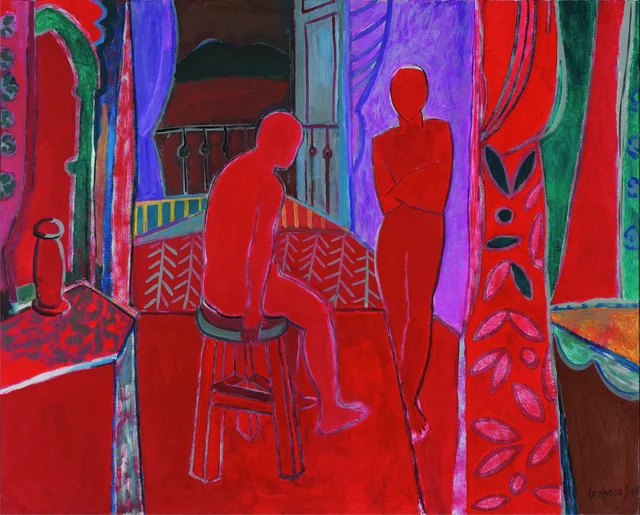
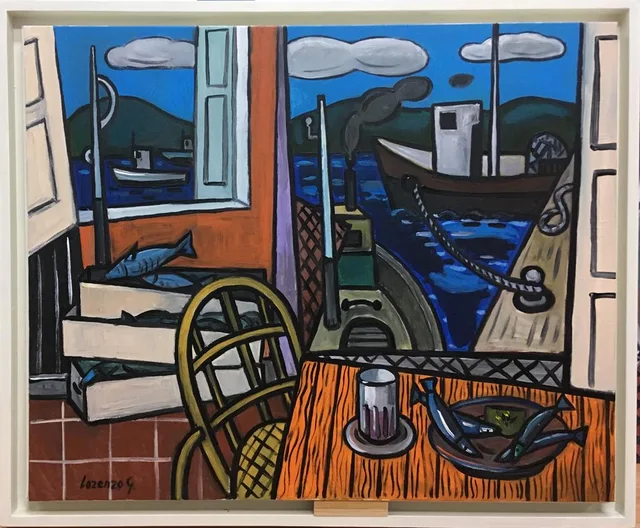
In Lorenzo González Sánchez’s work, contours and colour fields make scenes recognisable while exposing their construction. Interior rojo and Taberna en puerto de Vares offer two examples: a room with figures and an interior opening onto a harbour. Identifying the subject is only the beginning.

Figuration, naturalism and abstraction
Figuration concerns a relationship to identifiable subjects. Naturalism describes representation close to observed appearances. A painting may therefore be figurative while radically transforming bodies or space. A recognisable face does not require detailed anatomy or plausible skin colour.
Abstraction can contribute through selection, simplification or reorganisation. A head reduced to a silhouette may remain recognisable if sufficient cues survive. Elsewhere, shapes cease to refer clearly to identifiable objects or figures.
These distinctions describe degrees and operations rather than rigid categories. MoMA’s figurative works span different periods and approaches: figuration is neither a single style nor a particular technique.
Contour as information
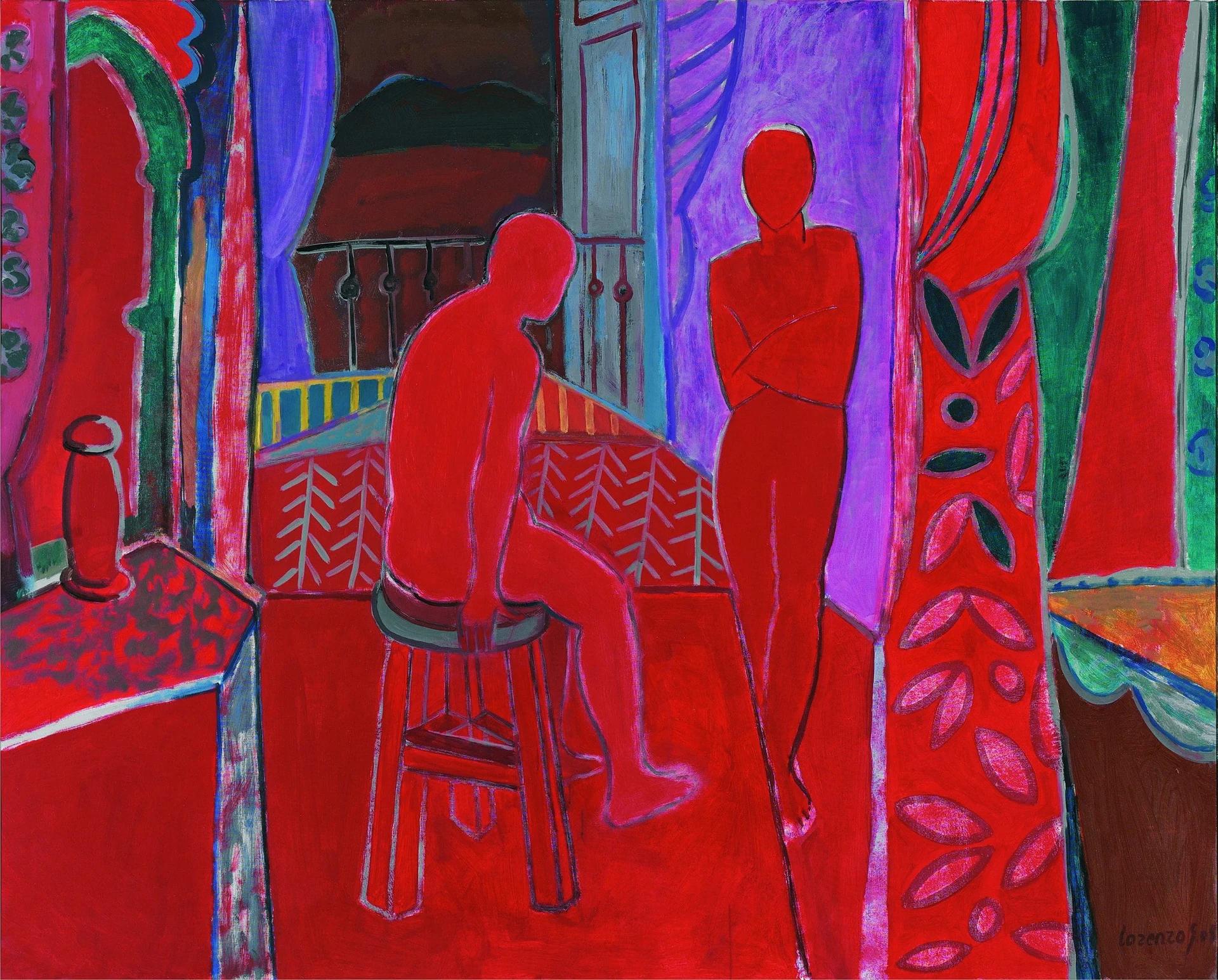
A contour distinguishes a shape from its surroundings. It may be a drawn line or the meeting of two colour fields. Thickness, continuity and contrast influence recognition and separation from the background.
In Interior rojo, one figure sits leaning forwards while another stands with crossed arms. Silhouette and posture identify both despite limited facial detail. A light edge and the stool’s lines distinguish the seated body from the red floor.
The standing figure’s arms provide enough information to read the pose. Its head remains human despite having scarcely any internal features. Analysis can identify these cues without inventing an undocumented story about the scene.
A colour shared by body and room
Red extends through bodies, floor and side surfaces in Interior rojo. Elements that could have different materials and colours in a real room become connected within the painting. Violet, green and light lines interrupt this continuity.
The standing figure is readily distinguished against violet. The seated figure requires a different device because body and floor have similar colours. Their comparison shows that figure-ground separation can be resolved in several ways within one painting.
Continuous naturalistic modelling is not necessary for the scene to remain intelligible. Stool, curtains and rear opening provide spatial cues. Colour helps construct the image as well as describe its subjects. The colour guide examines these relationships without assigning fixed emotions to hues.
A harbour recognised through planes
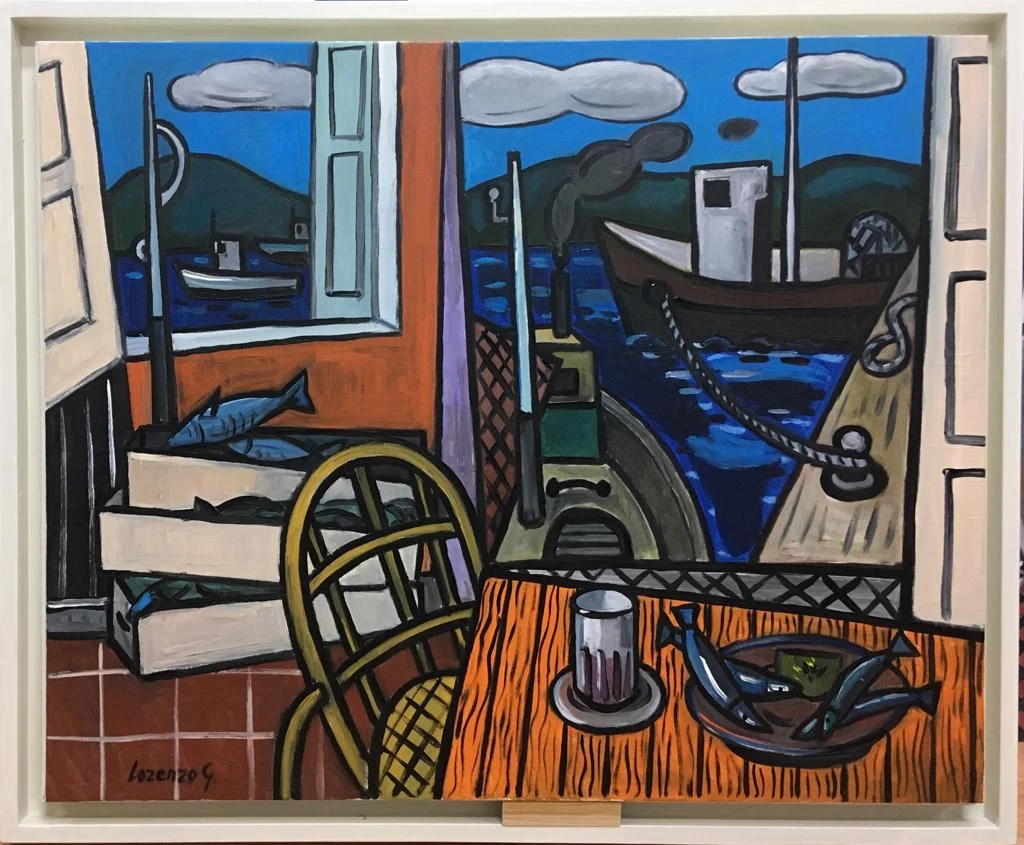
In Taberna en puerto de Vares, the foreground table supports a glass and a plate with fish. A chair and boxes occupy the left; two openings show boats and water. Title and objects establish the subject while composition relates inside to outside.
Hull, cabin, funnel and mooring rope identify the boat in the larger window. Each is summarised through distinct profiles and surfaces. The rope curves towards the quay across several areas of the image.
Light frames separate the views from the interior and divide the picture into rectangles. A window thus has both a representational and a compositional function: it belongs to the tavern and organises the image. Analysis goes beyond listing what is depicted.
What can be claimed about a painting
Description identifies visible evidence: two figures, crossed arms, an orange table, a window. Formal analysis relates that evidence: a light edge separates two reds; a frame divides the scene; repeated blues connect harbour areas. Interpretation proposes an effect or meaning and must explain its basis.
In Interior rojo, the leaning posture and figures’ stillness support a reading of a suspended scene. Identifying the people, their feelings or the artist’s reasons for painting them requires different evidence. A title does not automatically turn each figure into an identifiable portrait.
The biography and critical texts document Lorenzo’s career and must remain distinct from the present analysis. A critic’s signed opinion belongs to its own text and context; it cannot become a blanket statement by the painter.
Approaching contemporary figuration
Identify the subjects, then ask what has been simplified or exaggerated and which cues keep the scene legible. Examine how colour and space are distributed. Technical terms become useful when their functions can be pointed out in the reproduction.
Both paintings retain recognisable rooms and objects while reorganising their relationships. Interior rojo connects different areas through dominant colour; Taberna en puerto de Vares articulates its scene through windows, rectangles and contours.
The painting archive broadens the comparison. The composition guide offers a method based on hierarchies, directions and repetitions.
Observation exercise: recognition with few contours
Choose one figure in Interior rojo and draw its silhouette without internal detail. Identify the directional changes sufficient to convey its posture. Add one internal line and note the new information. Distinguish what the contour shows from what you interpret.
Sources and references
These sources support the technical concepts. The readings of individual works are editorial interpretations of the linked reproductions.